
What is PCOS?
PCOS stands for polycystic ovary syndrome. If you’re looking for a simple PCOS meaning, it’s a hormonal condition that affects how your ovaries function and how your body regulates key hormones.
PCOS can interfere with ovulation, which is why periods often become irregular or stop altogether. It can also affect how your body handles insulin, which can contribute to symptoms such as weight changes, acne, and darkened skin. Despite the name, not everyone with PCOS actually has cysts on their ovaries. It’s more about how your hormones and body systems are functioning overall.
It’s also more common than many people realise, affecting around 1 in 10 women [who.int]. And while it’s not always painful, some women do experience discomfort, such as pelvic pain, bloating, or ongoing cramping.
What makes PCOS challenging is that it doesn’t look the same for everyone. Some women have clear, noticeable symptoms, while others only pick up on small changes over time. Because of that, it can feel confusing in the beginning, and many women don’t immediately connect what they’re experiencing to a condition like PCOS.
What Are the First Signs of PCOS?
It’s rarely just one clear sign with polycystic ovary syndrome (PCOS). It’s usually a combination of smaller changes that are easy to overlook at first.
Maybe your period starts coming late… or not at all. Your skin might break out in a way that feels different from normal. You might notice changes in your weight or hair, or even just feel a bit “off” without knowing why.
On their own, these signs don’t always mean much. But when a few of them start happening at the same time, or keep coming back, it’s usually your body trying to tell you something.
Irregular or Missed Periods
One of the first signs of PCOS is usually changes in your period, but it doesn’t always feel like a big deal at the time. A typical cycle falls somewhere between 21 and 35 days [my.clevelandclinic.org], so when your period starts coming late, skipping months, or showing up inconsistently, it’s easy to brush it off as stress or just your body being “a bit off.”
The thing is, many women with PCOS only have around 6 to 8 periods a year (or fewer) [womenshealth.gov] and don’t realise that’s not considered regular. What’s actually happening in the background is that ovulation isn’t happening consistently, which throws your whole cycle off. If your period is often late, missing, or unpredictable, it’s one of the clearest early signs that something deeper could be going on.
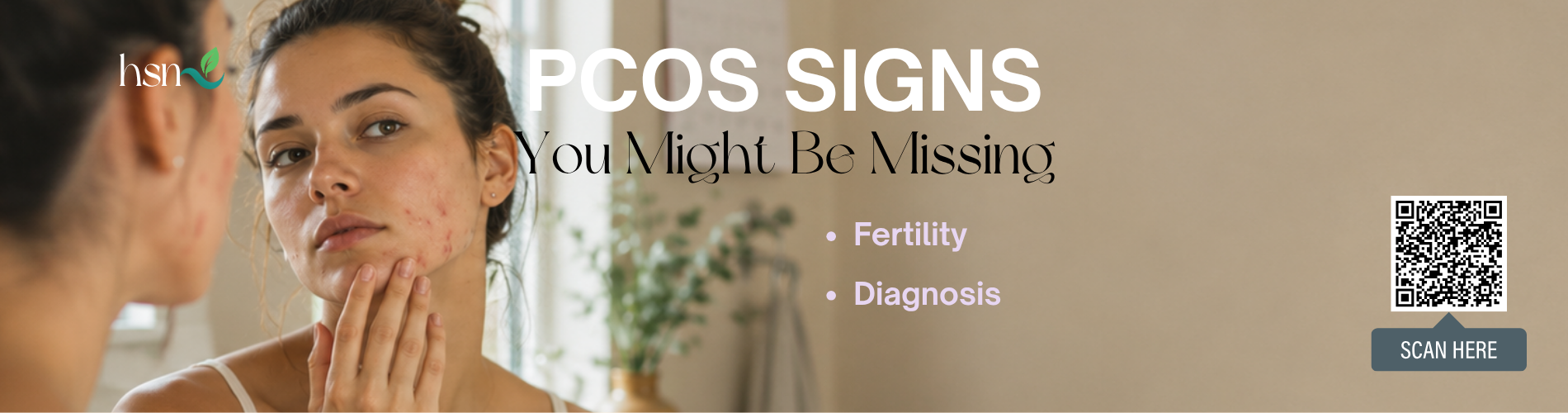
Acne That Doesn’t Go Away
This isn’t just the occasional breakout. It’s the kind of acne that sticks around, shows up in the same areas, and doesn’t really respond to the products you’ve always used.
With PCOS, breakouts are often linked to higher levels of androgens, which can make your skin produce more oil. That’s why acne tends to show up more around the jawline, chin, and lower cheeks. For many women, this continues well past their teenage years, sometimes into their 20s or 30s, which is where it starts to feel confusing.
A lot of the time, it’s treated as a skincare issue when it’s actually hormonal. So if your acne feels persistent or different from what you’re used to, it could be one of those early signs your body is trying to flag.
Unusual Hair Growth or Hair Loss
This is one of the more noticeable PCOS symptoms, but it doesn’t always get spoken about openly. Some women with PCOS start noticing thicker or darker hair in places like the chin, upper lip, chest, or stomach, while at the same time dealing with thinning hair on their scalp.
It’s estimated that up to 70% of women with PCOS experience this type of hair growth, which again links back to higher androgen levels [pmc.ncbi.nlm.nih.gov]. What makes it tricky is that it often happens gradually, so it’s easy to normalise or manage without thinking too much of it.
But when you look at it alongside other changes, like irregular periods or acne, it starts to form part of a bigger picture.
Sudden Weight Gain or Trouble Losing Weight
Weight changes with PCOS don’t always happen gradually. For a lot of women, it feels like the weight comes on quickly or becomes much harder to lose, even when nothing has really changed in their routine.
This is often linked to insulin resistance, which affects up to 70% of women with PCOS [pmc.ncbi.nlm.nih.gov]. It basically means your body isn’t using insulin properly, so it holds onto more glucose and stores more fat, especially around the lower abdomen.
That’s why you might feel like you’re doing “everything right” but not seeing results. It’s not just about diet or exercise, as there’s a hormonal side to it that makes things more complicated. When weight gain happens alongside other signs like irregular periods or acne, it’s usually not random.
However, if you’re struggling to understand changes in your weight, our BMI calculator can help you get a clearer picture of where you currently stand, and learning how protein shakes may support fullness, muscle maintenance, and healthy weight loss could also make the process feel a little more manageable.
Pelvic Pain or Discomfort
Not everyone with PCOS experiences pain, but for some women, it can be one of the early signs that something isn’t quite right, especially when looking at what are the first signs of PCOS pain.
This can feel like a dull ache in the lower abdomen, occasional cramping outside of your period, or discomfort that comes and goes without a clear reason. It’s easy to assume it’s just normal cycle-related pain, especially if it’s not severe.
In some cases, the discomfort can be linked to enlarged ovaries or multiple small follicles, which are often associated with PCOS. Even though the pain isn’t always intense, it can still be a signal that your body is dealing with hormonal changes behind the scenes.
Darkened Skin (Neck, Underarms)
This is one of the lesser-known signs, but it’s actually quite common with PCOS.
You might notice patches of skin becoming darker, thicker, or slightly velvety in areas like the back of your neck, under your arms, or even around your groin. It’s not dirt or something you can scrub away, which is why it can feel confusing at first.
This is called acanthosis nigricans, and it’s strongly linked to insulin resistance. In other words, it’s another outward sign that your body is struggling to manage blood sugar properly. And because it develops slowly, many women don’t connect it to anything serious. But when it shows up alongside other symptoms, it can be an important piece of the puzzle.
Why Do These PCOS Symptoms Happen?

Once you start noticing these signs, it’s natural to wonder what’s actually causing them.
The answer isn’t always straightforward. When it comes to what causes PCOS, it’s not just one single issue. It’s usually a mix of hormonal changes, how your body processes insulin, and in some cases, your genetics.
That’s why PCOS can look so different from one person to the next. But underneath those differences, there are a few key factors that tend to drive most of the symptoms.
Hormone Imbalance
PCOS is a hormone imbalance, which is what triggers most of the symptoms you see on the outside. Your body naturally produces a small amount of androgens (often called male hormones), but with PCOS, those levels can be higher than normal. This shift can affect how your ovaries function, which is where the term polycystic ovaries comes from.
When hormones are out of balance, ovulation doesn’t always happen the way it should. That’s why periods become irregular or stop altogether. It’s also what can lead to symptoms like acne, excess hair growth, or thinning hair.
What makes it tricky is that this imbalance isn’t always obvious at first. It develops over time, and many women only realise something is off once multiple symptoms start showing up together.
Insulin Resistance
Insulin resistance is one of the biggest drivers behind PCOS, even though most women don’t realise it.
Insulin is the hormone that helps your body manage blood sugar. But when your body becomes resistant to it, it has to produce more and more insulin to do the same job. Over time, those higher insulin levels start affecting your hormones.
This is where things start to connect. Higher insulin can trigger your body to produce more androgens, which then feeds into symptoms like irregular periods, acne, weight gain, and even those skin changes like darkened patches.
Most women with PCOS deal with some level of insulin resistance. That’s also why weight can feel harder to manage, especially around the abdominal area, even when your habits haven’t really changed. So while it might not be something you can see directly, insulin resistance is often one of the key reasons these symptoms show up in the first place.
Genetics
Genetics can also play a role in PCOS, which means it can run in families. If your mother, sister, or even a close relative has been diagnosed with PCOS or had similar symptoms, your chances of developing it may be higher. That doesn’t mean it’s guaranteed, but it does increase the likelihood.
What’s important to understand is that genetics alone don’t usually cause PCOS. It’s more about a predisposition. When combined with factors like hormone imbalance or insulin resistance, those genetic tendencies can start to show up as symptoms.
This is also why some women notice signs earlier than others, or experience more severe symptoms, even within the same family.
Can You Get Pregnant With PCOS?
Yes, you can get pregnant with PCOS. But it’s not always as straightforward. PCOS can affect ovulation, which is the process your body uses to release an egg each month. If ovulation isn’t happening regularly, it can make it harder to predict your cycle and time pregnancy.
That said, many women with PCOS still fall pregnant naturally. Others might need a bit of support, like medication to help regulate ovulation or guidance from a doctor.
It’s also worth knowing that PCOS is one of the most common causes of fertility challenges, but it’s also one of the most manageable. With the right support, lifestyle changes, and in some cases medical treatment, pregnancy is very possible. So while PCOS can make things a bit more complicated, it doesn’t mean it’s not going to happen.
How Do You Know If It’s PCOS?
Noticing a few of these signs doesn’t automatically mean you have PCOS. But when they start showing up together or becoming more consistent, it’s usually worth looking into.
This is where things shift from guessing to actually understanding what’s going on in your body. Because while the symptoms can give you an idea, PCOS isn’t something you can confirm on your own.
There are a few key ways doctors assess it, ranging from patterns in your symptoms to specific tests and medical evaluations.
When Symptoms Start Adding Up
If you’ve been dealing with a mix of these symptoms for a while, it’s probably not just a coincidence. This is usually where it makes sense to stop brushing it off and start looking into what’s actually going on. Not everything points to PCOS, but when certain patterns keep showing up, it’s worth getting clarity.
This is also where tracking your symptoms can help. Things like your cycle, changes in your skin, weight, or hair can give a clearer picture over time and make it easier to explain what’s been happening when you speak to a doctor.
Blood Tests for PCOS
If PCOS is suspected, one of the first steps is usually a blood test.
A polycystic ovary syndrome blood test isn’t just one single test. It’s a combination of checks that look at your hormone levels, including things like testosterone, estrogen, and other markers that help show how your body is functioning.
Doctors may also look at your blood sugar and insulin levels, especially since insulin resistance is so closely linked to PCOS. In some cases, thyroid levels are checked too, because similar symptoms can overlap. These tests don’t diagnose PCOS on their own, but they help rule things out and build a clearer picture of what’s going on.
Before doing anything, you can:
- Call your medical aid and ask if hormone blood tests are covered
- Ask your GP to motivate the tests properly (this can help with approval)
Doctor Diagnosis
If you do decide to see a doctor, the appointment is usually more of a conversation than people expect.
They’ll start by asking about your cycle, your symptoms, and anything you’ve noticed over time. Things like how often your period comes, changes in your skin, weight, or hair, and even your family history can all come up. It might feel like a lot of questions, but it helps them build a clearer picture.
From there, they’ll guide you on what needs to be checked next, whether that’s blood tests, a scan, or both. You don’t have to walk in knowing exactly what to ask for. That’s their role.
You’ll usually start with a GP, who can then refer you to a gynaecologist if needed. And if it does turn out to be PCOS, the focus doesn’t stop at diagnosis. The next step is understanding how to manage it in a way that works for your body.
What to Do If You Notice Early Signs of PCOS
Noticing these changes can feel confusing, especially if you’re not sure what they mean or what to do next.
The good news is that once you understand what are the first signs of PCOS, you’re already in a better position to take action. You don’t need to have everything figured out straight away, but there are a few simple steps that can make a real difference early on.
Don’t Ignore the Symptoms
It’s easy to brush things off, especially when they don’t feel serious on their own. A late period, a bit of acne, some discomfort here and there, it’s all things you can explain away.
But when those symptoms keep showing up, your body is usually trying to get your attention.
Ignoring it doesn’t make it go away. In some cases, symptoms can become more noticeable over time, and things like ongoing PCOS pain or cycle issues can start affecting your day-to-day life more than you expected.
This doesn’t mean you need to panic. It just means it’s worth taking seriously enough to pay attention, track what’s happening, and take the next step when you’re ready.
Small Lifestyle Changes That Help
What you do day to day can either make symptoms feel worse… or a lot more manageable.
Here’s how you can start improving your PCOS symptoms:
- Focus on balanced meals – Eating carbs on their own can leave you feeling hungry again quickly. Adding protein or healthy fats like eggs, chicken, yogurt, or avocado helps keep your energy more stable throughout the day. You can also explore our guide on affordable healthy food in South Africa for realistic meal ideas and budget-friendly options that make eating well with PCOS feel a lot more doable.
- Move your body regularly (but keep it realistic) – You don’t need intense workouts every day. Walking, light strength workouts, or even just staying active during the day can support your hormones without putting your body under extra stress. If finding time to exercise feels difficult, our 30-minute home workout guide for busy moms can still be helpful, even if you’re not a mom, as the routines are designed for anyone who wants realistic workouts that fit into a busy schedule.
- Get consistent sleep where you can – Irregular sleep can make symptoms harder to manage. Even aiming for a more consistent bedtime can make a noticeable difference over time.
- Pay attention to stress – Stress doesn’t just affect how you feel. It can also impact your hormones. Small things like taking breaks, getting outside, or switching off properly at night can help more than you’d expect.
- Track what’s actually happening – Keeping note of your cycle, skin, or any changes you notice helps you spot patterns. It also makes it easier to explain things clearly if you decide to see a doctor.
When to See a Doctor
If PCOS causes symptoms that keep coming back or start affecting your daily life, it’s a good idea to speak to a doctor.
You don’t need to wait until things feel “serious.” If your period is consistently irregular, your skin isn’t improving, or you’re noticing changes in your weight, hair, or overall health that don’t make sense, it’s worth getting checked out.
And if it is PCOS, the sooner you understand what’s going on, the easier it is to manage it properly.
Conclusion: Get Help to Live More Comfortably
PCOS can feel confusing at first, especially because the signs don’t always seem connected. But once you start recognising the patterns, it becomes much easier to understand what your body is trying to tell you.
The most important thing is not to ignore those early changes. Whether it’s irregular periods, ongoing acne, or something that just feels “off,” paying attention early can make a big difference.
If you’re unsure, speaking to a doctor and getting the right checks done, including a blood test for polycystic ovaries, can help give you clarity and peace of mind. PCOS is common, manageable, and something many women live with. The key is understanding it early and knowing that you’re not alone in it.
Frequently Asked Questions (FAQs)
What skincare products help with acne caused by the first signs of PCOS?
When acne is linked to PCOS, it’s usually hormonal, which means products alone won’t fix everything, but they can help manage it.
Look for ingredients like:
- Salicylic acid to unclog pores
- Niacinamide to reduce oil and calm the skin
- Benzoyl peroxide for breakouts
- Retinoids (like adapalene) to support skin turnover
Try to keep your routine simple and consistent rather than constantly switching products. And if your acne isn’t improving, it’s often a sign that there’s a hormonal side that needs attention, too.
Can online health platforms in South Africa help diagnose PCOS early?
Online platforms can be a helpful starting point, especially if you’re unsure whether your symptoms are worth checking out. They can guide you through your symptoms, offer basic advice, and in some cases connect you with a doctor. But they can’t fully diagnose PCOS on their own.
Since PCOS diagnosis often involves blood tests or scans, you’ll still need to follow up with a GP or specialist. Think of online platforms as a first step, not your final answer.
Where can I buy hormone testing kits for PCOS at home in South Africa?
At-home hormone testing kits are becoming more accessible in South Africa, and you can usually find them through online health stores, select pharmacies, or private lab services like Lancet and Ampath. These kits can give you a general idea of your hormone levels, which may help if you’re starting to look into what is PCOS disease and whether your symptoms could be linked to it.
That said, they’re not always the most reliable way to diagnose PCOS. Hormone levels can change throughout your cycle, and results still need proper interpretation.
If you do use a home test, it’s best to take your results to a doctor so you can get a clearer and more accurate understanding of what’s going on.
Are there popular supplements recommended for managing early PCOS symptoms?
There are a few PCOS supplements that are commonly used to support symptoms, especially when it comes to hormone balance and insulin sensitivity.
Some of the most talked-about options include:
- Inositol, which is often used to support ovulation and hormone regulation
- Omega-3, which may help with inflammation
- Vitamin D, since many women with PCOS are low in it
- Magnesium, which supports overall metabolic function
That said, supplements aren’t a quick fix. What works for one person might not work the same for someone else, especially since PCOS can look different from person to person. If you’re thinking about adding supplements, it’s a good idea to check in with a healthcare provider first so you know you’re taking what your body actually needs.
Which clinics in South Africa specialise in diagnosing PCOS early?
You don’t always need a specialised clinic to get started. Most women begin with a GP, who can assess your symptoms and guide you on the next steps. From there, you might be referred to a gynaecologist or an endocrinologist, depending on what you’re experiencing. For example, if symptoms like PCOS hair loss, or other hormone-related changes are more noticeable, a specialist can help look at the underlying cause in more detail.
In South Africa, you can also go through private lab groups like Lancet Laboratories or Ampath for blood tests if your doctor refers you. For consultations, private hospital groups such as Netcare and Mediclinic have gynaecologists and specialists who regularly diagnose and manage PCOS.
If you’re using medical aid, it’s worth checking which doctors and facilities are covered under your plan to avoid unexpected costs.
