After giving birth, you may notice your weight dropping fairly quickly at first, only for things to slow down a few weeks later. That can leave you wondering whether you should eat less, exercise more, or give your body more time. The early weight you lose after birth is not necessarily body fat, as your body is still recovering from pregnancy and childbirth. Breastfeeding can also affect your appetite and energy needs, while broken sleep can make it harder to eat well and stay active.
This guide to postpartum weight loss in South Africa was researched and prepared by our writing team’s research department, using reputable health sources and scientific studies to provide practical, evidence-informed guidance on when to start, what realistic progress can look like, what to eat, how breastfeeding affects weight loss, and which types of exercise can help.
Key Takeaways
- The weight you lose immediately after birth isn’t a measure of your fat loss progress. Your baby’s weight, placenta, amniotic fluid, and retained fluid contribute to the initial drop. Once those changes settle, the scale may move much more slowly as your body recovers.
- Breastfeeding can leave you hungrier, even when you’re trying to lose weight. You may find yourself needing a proper meal or snack after a long feeding session, or feeling hungry during overnight feeds. Cutting portions without accounting for this increased energy demand can leave you struggling to maintain your energy and support milk production.
- Your first fitness goal doesn’t have to be getting back to your pre-pregnancy workouts. A comfortable walk, followed by simple movements such as sit-to-stands, squats or resistance-band rows when you’re ready, can help rebuild the strength you use every day to carry your baby, lift a car seat and move around comfortably.
When can you start losing weight after pregnancy?
There is no universal date for starting intentional fat loss after pregnancy. Some weight naturally drops after delivery as your baby, placenta, amniotic fluid and retained fluid leave your body, but this isn’t the same as losing stored body fat. Returning to gentle everyday activity can happen gradually during recovery, while deliberately creating a calorie deficit requires more consideration of your healing, energy needs and breastfeeding.
How to tell if you’re ready to focus on fat loss
Before focusing on postpartum fat loss, think about how well you are recovering rather than counting the weeks since giving birth. You should be able to eat regular meals, manage daily activities, and attend your postpartum follow-ups. If you have worsening pain or bleeding, very low energy, or activity restrictions after a C-section or other complications, you need more time to heal. If you are breastfeeding, your food intake also needs to support recovery and milk production.
If you are still struggling to eat enough, feeling exhausted or dealing with significant symptoms, fat loss doesn’t need to be your focus yet. Once you are eating consistently, your energy has improved, and you can exercise within any restrictions, you can start creating healthy habits that support gradual fat loss.
How much postpartum weight loss is realistic?
There is no set amount of weight you should expect to lose each week or month after giving birth. The initial drop on the scale comes largely from your baby, placenta, amniotic fluid and retained fluid, while losing stored body fat happens later. Your progress depends on pregnancy weight gain, starting weight, breastfeeding, food intake, activity and recovery.
Why your weight-loss timeline may look different from someone else’s
A longitudinal study followed 152 women from pregnancy through the first 12 months after birth to examine postpartum weight retention [mdpi.com]. Of the 129 women assessed at six months, 22.4% had returned to or fallen below their pre-pregnancy weight. At 12 months, 32.5% of the 114 women included in that analysis had done so.
The study was conducted in Newcastle, Australia, with participants recruited between July 2006 and December 2007. Postpartum weight retention refers to weighing more after pregnancy than before becoming pregnant. In this study, women who weighed more than their pre-pregnancy weight were classed as retaining weight, while those at or below it were classed as non-retainers [researchgate.net].
These findings show how differently recovery and weight changes can progress. At six months, more than three-quarters of the women assessed still weighed above their pre-pregnancy weight. By 12 months, that proportion had decreased, but around two-thirds of the women assessed still had some weight to lose to return to their earlier weight. This was one Australian study, not a prediction of what will happen to every woman in South Africa.
A study’s average should not become a deadline for your own postpartum weight loss.
Does breastfeeding help you lose weight?
Breastfeeding can increase energy expenditure, but it does not guarantee postpartum weight loss. Women can respond very differently while breastfeeding, and increased hunger can make it easier to eat more. Your energy needs are also higher during this time, so breastfeeding should not be viewed as a way to lose pregnancy weight automatically or as a reason to breastfeed.
Your energy needs change while you’re breastfeeding
Making breast milk uses extra energy, so your calorie needs can be higher while breastfeeding than they were before pregnancy. The CDC’s Dietary Guidelines estimate an additional 330 calories per day during the first six months of lactation and 400 calories during the second six months for women with a healthy pre-pregnancy weight [cdc.gov].
These numbers are a general guide, not a calorie target you need to follow. How much you need to eat can vary based on your body size, activity level, and how often you breastfeed. This is why cutting your food intake based on an online calculator may not be the best approach while you are breastfeeding and recovering after birth.
A bigger calorie deficit isn’t always better
An aggressive calorie deficit can mean skipping meals or dramatically reducing portions, which isn’t necessary for postpartum weight loss. Smaller changes to your food intake are easier to maintain and can help you lose weight without creating a large gap between calories consumed and burned.
If you are breastfeeding, be careful about cutting calories since your energy needs are higher. A registered dietitian or healthcare professional can help you choose a weight-loss approach that supports your recovery, activity level, and breastfeeding needs.
What should you eat for postpartum weight loss?
There is no special postpartum weight loss diet you need to follow. Instead, build meals around protein, a fibre-rich carbohydrate, fruit or vegetables, and healthy fats. This simple meal structure can help you put together filling, nutritious meals while keeping your overall calorie intake manageable as you work towards fat loss.
Build meals that keep you full for longer
Protein helps you stay full, supports recovery and helps preserve lean muscle while you lose body fat. Easy options include eggs, chicken, lean mince, fish, tinned tuna or pilchards, yoghurt, cottage cheese, beans and lentils. Pair these with fibre-rich foods such as oats, potatoes or sweet potatoes, wholegrain bread, fruit and vegetables to add volume and support digestion.
For example, try eggs with wholegrain toast and fruit at breakfast, chicken with sweet potato and vegetables at lunch, or mince with beans, rice and a side salad for dinner. You do not need to cut out carbohydrates to lose body fat.
Healthy foods can still make portions add up quickly
When you are trying to lose weight after pregnancy, portion size still matters, even when the food itself is nutritious. Nuts, seeds, avocado, oils, and nut butter are all healthy choices, but they are also high in calories. For example, a thin layer of nut butter on toast is different from eating spoonfuls straight from the jar.
You do not need to avoid these foods to lose weight after giving birth. Instead, pay attention to how much you are eating. Being mindful of portion sizes can help you include calorie-dense foods in your meals while still supporting your postpartum weight loss goals.
What does a postpartum weight-loss meal actually look like?
For breakfast, try eggs with wholegrain toast, tomato and avocado, or plain yoghurt with fruit and granola. For lunch, have chicken with rice and mixed vegetables. Dinner could be tuna with potato and salad or lean mince with rice and vegetables. For a quick meal, try beans or lentils with rice and avocado.
Adjust the meal you already eat instead of making “diet food”
You do not need to cook a separate dinner just because you are trying to lose weight. A few changes to your usual meals can make them more filling while supporting your postpartum weight loss. If you usually have a large bowl of rice with a small amount of chicken, keep the chicken and reduce the rice portion, and add vegetables. Leftover mince can also be served with potato or rice and vegetables instead of ordering a separate “healthy” meal.
For a filling breakfast, add eggs to your toast and serve yoghurt or fruit on the side. If you like granola, have a smaller portion with yoghurt and fruit. You are not replacing your usual meals with “diet food”; you are simply making small changes.
What can you eat when you have no time to cook?
A new mom diet plan does not need to be complicated. When you have a baby to care for, finding time to cook can be difficult. Keep quick, easy foods on hand so you can still eat regular meals on busy days. Convenience foods are not automatically unhealthy, and skipping meals can leave you very hungry later.
Keep an emergency meal ready for chaotic days
On busy days, having a few almost-no-cook meals ready can make eating regularly much easier. Try plain yoghurt with fruit and granola, scrambled or boiled eggs with wholegrain toast and fruit, microwave rice with tinned tuna and frozen vegetables, or wholegrain toast with nut butter, banana and yoghurt. These options need very little preparation and can be put together in minutes.
Combining protein, carbohydrates and fruit or vegetables makes these options more filling than grabbing a small snack and still feeling hungry soon after.
The new-mom “I have no time” meal builder
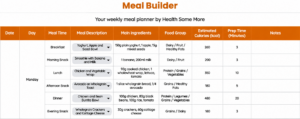
Planning meals can feel like another task on an already busy day, especially when you’re caring for a newborn. The New-Mom “I Have No Time” Meal Builder is a free, editable weekly planner designed to make deciding what to eat a little easier.
How to use the meal planner:
- Open the template: Click the link below to view the meal planner in Google Sheets.
- Create your own copy: Select File → Make a copy to save an editable version to your Google Drive.
- Choose your meals: Use the dropdown menus to select breakfast, lunch, dinner and snack ideas for each day.
- Check your meal details: The main ingredients, food groups, estimated calories and preparation times will populate automatically when you select a meal.
- Personalise your plan: Add dates, notes and any changes you’d like to make. You can swap meals around to suit your schedule and what’s available in your kitchen.
You don’t have to plan every meal in advance or follow the same menu each week. Use the suggestions when you’re short on ideas and adjust the planner as your routine changes.
Calorie information is estimated using example portions and is optional to track. It is not a recommended daily calorie target. Breastfeeding mothers should ensure their food intake supports their energy needs, recovery and milk production.
Do you need to count calories to lose postpartum weight?
No, calorie tracking is not required, but energy balance still matters.
You can lower your overall intake by adjusting portions, meals, and drinks without logging every meal. A calorie deficit happens when you use more energy than you consume, and calorie counting is simply one way to keep track of your intake. Tracking is just a tool, not a requirement.
Eating less doesn’t always mean your daily intake is lower
“I barely eat all day” does not always mean you are in a calorie deficit. Skipping breakfast and lunch can leave you extremely hungry by dinner, making it easier to have a large meal and then continue snacking or drinking calories later. What matters is your total intake across the day, not simply how many meals you had.
Calories can also come from things that do not feel like a full meal, such as sugary drinks, juice, sweetened tea or coffee, biscuits, sauces, nuts, and nut butter. Takeaways can add up too! These foods do not automatically prevent weight loss; meal frequency alone cannot tell you how much energy you consumed.
Look for changes that don’t leave you starving
A calorie deficit does not have to mean making big changes to your meals. If you usually have two sugary drinks, have one and choose water or a sugar-free drink for the other. If biscuits are easy to grab while feeding, have yoghurt and fruit ready instead. These simple changes can help reduce your overall calorie intake without making you feel deprived.
The same goes for your main meals. If skipping lunch leaves you starving by dinner, add a proper lunch with protein. If your starch portion is very large, make it a little smaller and add more vegetables and protein. You do not need to change everything at once; start with one change that feels easy to maintain.
What exercise works best for postpartum weight loss?
There is no single best fat-burning workout. The type and amount of exercise you do should depend on your recovery, fitness level, and what feels comfortable for your body. Walking and other cardio can increase activity, while resistance training helps build and maintain muscle. The goal is to improve fitness and body composition, not to exercise to “earn” your food.
Build movement from your current starting point
If 10 minutes of comfortable walking feels manageable, try to incorporate it into your routine regularly. When it becomes easier, consider adding another short walk to your week or increasing the duration. You don’t need to get 10,000 steps in for your activity to count, or to help postpartum weight loss.
Caring for your baby, doing chores, and moving around the house count too. Focus on doing a little more as your strength and recovery improve, rather than chasing an arbitrary target.
Strength training helps you keep more than the scale in mind
Resistance training can help you maintain muscle while losing body fat, build muscle over time, and rebuild strength after pregnancy. That strength can make everyday tasks easier, from lifting and carrying your baby to picking up a car seat, getting off the floor, or carrying groceries. When you are ready, movements such as sit-to-stands, squats, rows, hip hinges, presses, and carries can help build strength and muscle.
You do not need a complicated gym setup to get started. A resistance band and an exercise mat can be useful for simple home workouts. Your recovery will determine which exercises are appropriate and when to start, so there is no single strength routine that suits every postpartum woman.
Know when exercise symptoms need attention
Exercise should never leave you with pelvic heaviness or pressure, urine or bowel leakage, significant pain, worsening bleeding or other new pelvic-floor symptoms. These are signs to slow down and get advice rather than pushing through them to burn more calories. A recognised postpartum return-to-running guide recommends progressing gradually and checking that activities such as walking, squats, and low-impact exercises can be performed without pain, heaviness, or incontinence before moving to higher-impact exercise [thepelvicstudio].
If these symptoms continue, speak to your doctor, midwife or a pelvic-health physiotherapist before progressing your exercise. The Pelvic, Obstetric and Gynaecological Physiotherapy (POGP) guidance also recommends seeking specialist support for urinary or faecal leakage, ongoing pelvic pain or pelvic-floor concerns rather than simply exercising through them [POGP].
Can poor sleep make postpartum weight loss harder?
Yes, poor sleep can make postpartum weight loss harder. Broken sleep can affect hunger, food choices, energy and motivation to stay active, and ability to prepare meals. Rather than aiming for perfect sleep, focus on simple meals, manageable movement and realistic habits that still work when your nights are disrupted.
Make your plan easier on exhausted days
When sleep is broken, make meals and movement easier to manage. Keep ready-to-eat protein, a quick breakfast and a freezer meal for days when cooking feels impossible. If you have a partner or family member around, ask them to handle a specific meal, such as dinner or lunch.
Eating a proper meal can be more beneficial than nibbling on biscuits or snacks throughout the afternoon, especially when you’re too tired to cook. A study involving 940 women found that those who slept for 5 hours or less at six months postpartum were more likely to retain at least 5 kg one year later. This does not mean you need to force more sleep; it shows why a realistic plan matters when sleep is disrupted.
Why isn’t your postpartum weight going down?
The scale might show the same number for a few days, and that doesn’t mean you’re not making progress. Your weight can be affected by water intake, digestion, and normal postpartum changes. If your weight stays the same for a while, look at your portions, meals, and activity before assuming your metabolism has stopped working.
Check these before you cut more food
Before cutting your food further, work through these questions:
- Have you been reasonably consistent for several weeks?
- Are you looking at your overall weight trend, rather than one weigh-in?
- Have your portions gradually increased?
- Are drinks adding more calories than you realise?
- Has tiredness led to more grazing or snacking?
- Are you skipping meals and eating much more later?
- Has your everyday movement decreased?
- Are your weekends very different from your weekdays?
- Is breastfeeding making you substantially hungrier?
You do not need to change everything at once. Work out which factor is most likely affecting your progress, make one sensible adjustment and give it some time before reassessing.
What could your first four weeks of postpartum weight loss look like?
If your goal is to lose baby weight in SA, think of these first four weeks as a chance to build a routine, not as a deadline to lose a certain amount of weight. Start with a few simple changes to your meals and movement, then add to them as you go. You do not need to change everything on day one.
Week 1 – make regular eating easier
The first week is about getting into a more regular eating routine. Try to have proper meals with protein in each one, and keep a few quick options on hand for busy days.
Drink enough fluids throughout the day and add some easy movement, such as a short walk. For now, focus on eating regularly rather than getting every portion perfect.
Week 2 – improve what is on your plate
This week, use the meal formula to make your usual meals more balanced. Include a source of protein, a carbohydrate, fruit or vegetables, and a fibre-rich food where possible.
Have a look at portions of energy-dense extras, and notice any sugary drinks or other liquid calories that may be adding up. You do not need to ban any food group.
Week 3 – build your movement
By week three, you can start adding a little more movement if your current routine feels comfortable. Take a few longer walks, add another short walk during the week, or introduce some simple resistance training if you are ready. Keep the focus on doing it regularly and on building strength and fitness, rather than on burning as many calories as possible.
Week 4 – review before you restrict more
At the end of the fourth week, look at the bigger picture rather than one number on the scale. Check your weight trend, how your clothes fit, your hunger and energy, how consistent your meals have been, and any changes in movement or strength.
If progress has stalled, choose one possible reason, make a small adjustment, and reassess. There is no need to reduce your portions drastically.
Conclusion: A Steadier Approach to Postpartum Weight Loss
Postpartum weight loss does not need to start with cutting food or doing more exercise. A better place to start is recover → eat regularly → improve meal structure → build movement → create an appropriate deficit → assess the trend → adjust one thing at a time. The goal is not the fastest possible weight loss, but an approach that supports recovery, adequate nutrition, and breastfeeding where applicable.
Choose one small step from this sequence that you can achieve today, like having a proper lunch, taking a 10-minute walk, or adding protein to your meals. Start there and build from it.
And if you want to work smart with your money, we have a guide on How to Eat Well with Any Budget!
Frequently Asked Questions about Postpartum Weight Loss South Africa
Is it normal to lose weight postpartum?
Yes, it is normal to lose some weight after having your baby. The first drop is partly the baby, placenta, and extra fluid. Body fat loss after pregnancy usually takes longer as you get back to normal eating and activity.
How much weight do you lose a month postpartum?
There is no set amount of postpartum weight loss you should expect each month. Your rate can vary based on how much weight you gained during pregnancy, whether you are breastfeeding, your food intake, activity levels, and how your recovery is going.
Why does postpartum weight loss take so long?
Postpartum weight loss can take time because your body is still recovering while you are dealing with broken sleep, less time to prepare meals, and changes in your usual activity. If you are breastfeeding, increased hunger and energy needs can also affect how quickly weight comes off.