

There always seems to be a reason to put yourself last.
Work gets busy. The school run takes over your morning. Someone in the family gets sick. Dinner still needs to be made. Before you know it, another week has gone by, and the healthy habits you promised yourself you’d start are pushed to “next Monday”… again.
I’ve struggled with this for years as a full-time mum and business owner. I wanted to become a healthier version of myself, but finding the time, energy, and motivation to stay consistent felt almost impossible some weeks.
What finally changed wasn’t my schedule. It was the way I approached building healthy habits.
What are healthy habits?
Healthy habits are small actions you repeat consistently that support your physical and mental well-being. They don’t have to be life-changing on their own. Drinking more water, going for a daily walk, getting enough sleep, or eating balanced meals are all healthy habits that become more powerful when repeated over time.
If better sleep is one of the habits you’re working on, magnesium may also play a role. Magnesium glycinate is a form of magnesium that’s commonly used by adults because of its potential to support relaxation and sleep quality. It can complement healthy sleep habits, such as sticking to a regular bedtime and giving yourself time to wind down.
Why healthy habits often fail to stick
Healthy habits rarely fail because people don’t care enough. More often, they fail because we try to change too much, too quickly.
It’s easy to feel motivated on a Monday and decide you’re going to wake up at 5 a.m., exercise every day, meal prep, drink two litres of water, and completely cut out sugar. A few days later, work gets busy, life happens, and suddenly the whole plan falls apart.
The problem wasn’t your motivation. It was trying to build five new habits at once instead of giving yourself the chance to succeed with one. These habits are meant to fit into your life, not take it over. The easier they are to repeat, the more likely they are to become part of your daily routine.
Which healthy habit should you start with first?
If you’re trying to change your lifestyle, start with the habit that feels easiest to keep doing based on what you are trying to achieve.
That could be drinking one extra glass of water every day, going for a 15-minute walk after dinner, adding a serving of vegetables to your lunch, or getting into bed 30 minutes earlier each night.
It might not seem like much, but that’s exactly the point. Small wins build confidence, and confidence makes it easier to add another healthy habit later.
Instead of asking yourself, “What’s the fastest way to become healthier?” ask yourself, “What’s one thing I can realistically keep doing next week?” That’s usually where lasting change begins.
How do you build healthy habits?
You build healthy habits by making them simple enough to repeat consistently. Instead of relying on motivation, choose one small action, do it regularly, and gradually build from there. Healthy habits become easier over time because repetition turns them into part of your routine rather than something you have to think about.
What to do when you miss a day or fall off track
If you skipped your walk yesterday, go today. If you ordered takeaway last night, make your next meal a balanced one. There’s no need to “start again on Monday” or punish yourself for one-off day.
Progress comes from what you do most of the time, not from being perfect every single day.
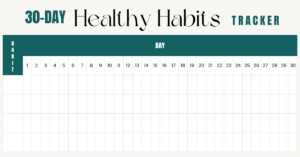
The 30-Day Healthy Habits Tracker
Use the tracker to focus on the habits that matter to you. Write each habit or goal you want to work on in one of the open boxes on the left. Then, each day you reach that goal, tick or colour in the matching box. Whether your goal is drinking more water, going for a walk, or getting to bed on time, you’ll be able to see your progress build over the 30 days.
How do you develop healthy eating habits?
Healthy eating habits are eating patterns you can realistically maintain for years, not just a few weeks. Instead of chasing the “perfect” diet, focus on building meals around whole foods, eating enough protein and fibre, and making small changes that fit into your daily routine. That’s what makes healthy eating sustainable.
If you’re looking for practical meal ideas, read our Healthy Eating Plan guide to learn how to build balanced meals that fit your budget and lifestyle.
Why restrictive diets make healthy eating harder
The stricter a diet is, the harder it usually becomes to follow.
Completely cutting out foods you enjoy often leads to cravings, frustration, and eventually giving up altogether. A healthier approach is learning how to enjoy treats in moderation while making balanced meals your everyday habit.
How your environment influences the food choices you make
Your environment shapes more of your eating habits than you probably realise.
If your kitchen is stocked with biscuits, chips, and cooldrinks, those will usually become the easiest choice. Keeping fruit, yogurt, nuts, or chopped vegetables within easy reach makes healthier decisions feel much less like a battle.
Here are healthy snacks to keep stocked:
- Organic date balls – A handy option when you’re craving something sweet. Dates provide natural sweetness and fibre, making them a more nutrient-dense choice than sweets or a chocolate bar.
- Caring Candies E-Vry1 Bars – An easy cupboard snack for when you want something sweet. They’re sugar-free, making them a useful alternative to keeping conventional sweets or sugary snack bars within easy reach.
The easiest healthy food swaps that become long-term habits
Healthy eating doesn’t have to mean replacing everything overnight. Small swaps often have the biggest impact because they’re easier to maintain.
Try swapping:
- White bread for wholewheat bread
- Sugary cooldrinks for water or sugar-free alternatives
- Flavoured yogurt for plain Greek yogurt with fruit
- Chips for popcorn or roasted chickpeas
- Creamy sauces for plain yogurt-based dressings
Healthy eating doesn’t have to be expensive. Our guide to Affordable Healthy Food in South Africa shares budget-friendly foods that make eating well much more affordable.
What are healthy diet habits that support long-term health?
Healthy diet habits focus on what you do consistently rather than what you eat occasionally. Eating patterns built around vegetables, fruit, whole grains, lean protein, and healthy fats support better long-term health and lower the risk of chronic diseases.
Why protein and fibre help you stay satisfied
Protein and fibre are two of the most important nutrients for building lasting healthy eating habits. Protein helps support your muscles and takes longer to digest, while fibre slows digestion and helps keep blood sugar levels steadier.
Together, they help you feel satisfied for longer, making it easier to manage hunger and avoid reaching for snacks between meals. Simple foods like eggs, chicken, Greek yogurt, beans, lentils, oats, vegetables, and fruit are all great ways to increase your intake.
If you’re finding it difficult to eat enough protein through meals alone, our guide to Protein Shakes for Weight Loss explains when they may be a helpful addition to a balanced diet.
Are ultra-processed foods always unhealthy?
Not always. The term “ultra-processed” covers a wide range of foods, and not all of them have the same nutritional value.
Foods like wholegrain bread, baked beans, fortified breakfast cereals, or plain yogurt can still be part of a balanced diet [discover.swns.com]. Instead of trying to eliminate every processed food, aim to eat mostly whole or minimally processed foods while limiting products that are high in added sugar, salt, and unhealthy fats.
How often should you eat treats?
Healthy eating doesn’t mean giving up your favourite foods forever.
Treats can absolutely fit into a balanced diet when they’re enjoyed in moderation. In fact, allowing yourself the occasional dessert, takeaway, or chocolate can make healthy eating feel much more sustainable than following a diet that labels foods as “good” or “bad.”
Your overall eating pattern matters far more than one meal or one snack.
What healthy habits should kids learn from an early age?
The most important healthy habits for kids are eating a balanced diet, being physically active every day, getting enough sleep, drinking water instead of sugary drinks, limiting recreational screen time, and learning healthy ways to manage emotions. Research shows that habits formed during childhood are more likely to continue into adulthood, making early routines an important foundation for lifelong health.
Why children copy the habits they see at home
Children learn by watching long before they understand why something matters.
Research in child development consistently shows that parents and caregivers are among the strongest influences on a child’s daily habits. If healthy meals, regular bedtimes, family walks, and drinking water are simply “what we do,” children are much more likely to carry those routines into adulthood.
Healthy routines the whole family can build together
Healthy habits don’t have to be complicated, they just need to happen regularly.
Some of the best routines families can build together include:
- Eating meals together whenever possible.
- Having a consistent bedtime and wake-up time.
- Keeping water easily available throughout the day.
- Spending time outdoors or being active together.
- Letting children help choose or prepare healthy meals.
These routines teach consistency rather than perfection, which is often what lasts.
Making healthy habits fun instead of a punishment
Children are much more likely to repeat behaviours they enjoy.
Instead of forcing vegetables or using exercise as a consequence, involve children in the process. Let them pick a new fruit at the shop, grow herbs or vegetables at home, create colourful lunchboxes, or turn movement into games, dancing, or bike rides.
Healthy habits should feel like a normal part of everyday life, not something children have to “get through.”
Conclusion: Change Your Life One Habit at a Time
The biggest change you can make is letting go of the idea that you have to be perfect. One balanced meal won’t transform your health, just like one takeaway won’t ruin it. What matters is what you choose to do consistently.
If you’ve been waiting for the “right time” to start, this is your reminder that you don’t have to do everything at once. Pick one habit, stick with it, and let it become part of your daily routine before adding the next.
To make it even easier, download our Healthy Habits Tracker and focus on building one habit at a time. Small, consistent actions might not feel life-changing today, but they can completely change where you are a year from now.
Frequently Asked Questions
How to build healthy habits?
The easiest way to build healthy habits is to start with one small change that fits into your daily routine. Once that habit feels automatic, you can gradually add another. Trying to change everything at once usually makes it much harder to stay consistent.
What are healthy habits?
Healthy habits are everyday behaviours that support your physical and mental well-being. Examples include eating balanced meals, staying active, getting enough sleep, drinking enough water, managing stress, and making time for regular movement.
How to develop healthy eating habits?
Developing healthy eating habits starts with making realistic choices you can maintain. Planning meals, eating enough protein and fibre, keeping healthy foods within easy reach, and avoiding overly restrictive diets are all habits that become easier with practice.
What are five good habits?
Five healthy habits that can make a real difference are:
- Drinking enough water every day.
- Eating balanced meals with protein and fibre.
- Being physically active most days of the week.
- Getting 7-9 hours of quality sleep.
- Managing stress through activities like walking, journaling, or mindfulness.
How do I take care of my life?
Taking care of your life starts with taking care of your health. Focus on building routines that support your body and mind, such as eating nutritious foods, staying active, getting enough rest, managing stress, and making time for the people and activities that matter most. Small, consistent choices often have the biggest impact over time.
