
Organic Skincare South Africa: What’s Actually Worth Using?
You pick up a skincare product and see words like natural, organic, clean, botanical, and cruelty-free across the label. They sound reassuring, but they don’t tell you whether that moisturiser will suit your skin, whether you need the serum next to it, or whether either one is worth the price.
That’s where skincare shopping gets confusing. Before long, three products can turn into ten, with no clear reason for using half of them.
This guide to organic skincare South Africa will help you understand those labels, decide which steps are worth your money, spot the optional extras, and build a simple routine that works for your skin.
Key Takeaways
- Organic doesn’t automatically mean better or safer. In South Africa, organic skincare claims should have proper substantiation. Check what the brand’s claim actually covers, rather than relying on a leaf symbol or the word “organic” on the packaging.
- Build your routine around the essentials first. A suitable cleanser, moisturiser and broad-spectrum SPF 30 or higher give you a practical starting point. Spend on these before adding several serums or treatments.
- Choose active ingredients according to your skin concerns. Vitamin C may suit someone concerned about dullness or uneven tone, while niacinamide may be useful for oiliness or barrier support. Exfoliating ingredients can help with texture, but adding more products doesn’t guarantee better results.
- Give new products time and introduce them carefully. Add one new treatment at a time so you can see how your skin responds. Irritation, persistent burning, or redness are reasons to reassess your routine, not signs that a product is working.
- Make every product earn its place. Before buying another serum, facial oil or exfoliant, complete the Bathroom Shelf Audit. Keep products that serve a clear purpose and suit your skin, rather than filling your shelf because a product is marketed as natural or organic.
Is organic skincare actually better for your skin?
Organic skincare isn’t automatically better or safer for your skin. In South Africa, organic claims should be substantiated using the criteria referenced in the Cosmetic Advertising Code, including SANS 16128-1 and SANS 16128-2 [diynaturally.co.za]. A product containing one organically sourced ingredient is not necessarily an entirely organic formulation, and organic sourcing does not guarantee that your skin will tolerate it.
“Natural” doesn’t automatically mean gentle
It’s easy to see a plant-based ingredient and assume it will be gentle on your skin, but where an ingredient comes from doesn’t tell you how your skin will react to it. Essential oils, fragrances, and some botanical extracts can still irritate your skin, especially if it is sensitive or reactive.
Synthetic ingredients shouldn’t automatically be seen as harmful either. Even water and plant extracts are made up of chemicals, so whether something is natural or synthetic tells you very little on its own. What matters is what’s in the formula and whether those ingredients are suitable for your skin.
Organic, natural, clean and cruelty-free aren’t the same
These claims can look similar on a skincare label, but they tell you different things about a product. Knowing what each one refers to makes it easier to assess what you’re buying rather than relying on the wording or imagery on the packaging.
Natural generally describes where an ingredient comes from, such as a plant, mineral, or other natural source. Organic is more specific: it refers to ingredients produced through organic farming or qualifying wild-harvesting methods. A product can contain natural ingredients without those ingredients being organic. Neither claim guarantees that the formula will suit sensitive skin, as plant extracts, essential oils and fragrances can still cause irritation.
Cruelty-free relates to animal testing, not where the ingredients come from. It indicates that a brand or product makes a claim about avoiding animal testing, but it does not automatically mean the product is vegan or organic. Vegan refers to the absence of animal-derived ingredients, while cruelty-free refers to animal testing. For example, a cruelty-free moisturiser could contain beeswax, making it non-vegan, and use conventionally farmed ingredients rather than organic ones.
Clean beauty is a marketing term rather than a consistent measure of a product’s safety or effectiveness. It doesn’t tell you whether a formula will work for your skin.
What does your skin actually need in a basic routine?
Your skin doesn’t need a long list of products for a basic routine. Start with three essentials: a gentle cleanser, a moisturiser that suits your skin, and a broad-spectrum SPF for daytime protection. Once you have those basics covered, you can decide whether your skin needs anything extra.
Start with three products before buying five serums
If you’re starting with an empty bathroom shelf and have R1,000 to spend, put your money towards the products that will support your everyday routine first. For example, you could allocate around R250 to a cleanser, R300 to a moisturiser and R450 to a broad-spectrum SPF. The exact amounts will depend on the brands and formulations you choose, but this gives you a practical starting point without spending most of your budget on treatments.
Each product has a specific job. Your cleanser removes sunscreen, makeup, excess oil and daily build-up, while your moisturiser helps keep your skin hydrated and supports its barrier. SPF protects your skin against UV exposure, which is particularly important when you’re trying to prevent sun damage and uneven pigmentation. These essentials give you a routine you can use consistently before deciding whether your skin needs a targeted treatment.
Once those basics are covered, consider what you’d actually like to address. For example, someone concerned about uneven pigmentation may decide that a suitable vitamin C serum is worth adding to their routine. Buying several serums without a clear purpose is unlikely to be as useful as choosing one treatment that addresses their main concern.
The aim isn’t to reach a certain number of products but to spend on what your skin genuinely needs.
Your cleanser should clean your skin without leaving it feeling “squeaky”
That squeaky-clean feeling isn’t something you need to aim for. After washing, your skin should feel clean and comfortable, not painfully tight, dry, itchy or stripped. If you’re reaching for moisturiser immediately because your face feels uncomfortable, it’s worth taking another look at your cleanser.
The Weleda Naturally Clear Purifying Gel Cleanser is a good option to consider for a replacement. However, “natural” doesn’t mean it’s suitable for all skin types. Check the ingredients and reflect on what has worked or irritated your skin in the past before buying.
Moisturiser and facial oil don’t do exactly the same job
Buying a facial oil doesn’t mean your moisturiser has to go. A moisturiser, such as the South Skincare Rapid Hydrating Moisturiser, helps hydrate and support your skin barrier. Jojoba oil plays a different role and can be an extra step if your skin handles facial oils well.
If you plan to use Faithful to Nature Organic Jojoba Oil with your moisturizer, apply your moisturizer first and then add the oil. It’s important to note that you don’t need to use an oil just because your skin feels dry. Additionally, if you have acne-prone skin, jojoba oil shouldn’t be included in your routine automatically.
Which skincare ingredients are actually worth adding to your routine?
Once your basic cleanser, moisturiser and SPF routine is in place, you can consider adding ingredients that address a specific skin concern. Vitamin C may be worth exploring for uneven tone or dullness, niacinamide for concerns such as excess oiliness, and exfoliating ingredients for rough or uneven texture. The right choice depends on what your skin needs, not which ingredient is trending.
Choose a serum for a problem, not because TikTok told you to buy one
A serum isn’t automatically worth buying just because it contains a popular active ingredient. Start by identifying what you’d like to improve, then look at whether an ingredient is suited to that concern. Vitamin C, for example, is commonly used in routines targeting dullness and uneven skin tone, while niacinamide is often chosen for oiliness, blemish-prone skin and skin barrier support.
Exfoliating ingredients, such as alpha hydroxy acids (AHAs) and beta hydroxy acids (BHAs), work differently. They help remove dead skin cells from the skin’s surface, making them an option for people concerned about rough texture or clogged pores. However, using more exfoliating products doesn’t necessarily mean you’ll get better results, and excessive exfoliation can leave your skin irritated.
These ingredients aren’t guaranteed treatments for acne, pigmentation or other skin conditions. Results depend on the formulation, concentration, how consistently you use the product and how well your skin tolerates it. You may not need any of these additions when your current routine is already working well.
Where does vitamin C actually fit into your morning routine?
If you want to add vitamin C to your morning routine, use it in this order: Cleanse → Vitamin C serum → Moisturiser → SPF. You would use vitamin C as your antioxidant step, particularly if you want to target dullness or uneven skin tone.
You can use the Faithful to Nature Vitamin C Serum after cleansing and before applying your moisturiser. Even with vitamin C in your routine, you still need sunscreen as your final morning step. Your vitamin C serum works alongside your SPF rather than replacing the UV protection your sunscreen provides.
Niacinamide may be the better choice if vitamin C isn’t your main concern
If dullness or uneven tone isn’t your main concern, vitamin C may not be the serum you want to prioritise. You might choose niacinamide instead if you’re more focused on controlling oil, caring for blemish-prone skin or supporting your skin barrier.
The Faithful to Nature Niacinamide Serum is a good option if it aligns with your skincare needs. You don’t need to buy it with the vitamin C serum; select one based on your specific goals.
How should you layer skincare without irritating your skin?
Start with the lightest products in your routine and work your way up to the thicker ones. Start with cleansing, follow with your serum or treatment, then apply moisturiser and finish with SPF in the morning. Give your skin time to adjust to new actives instead of introducing several at once.
Don’t introduce three new actives on the same Sunday night
Trying three new active ingredients on the same night makes it difficult to know which one your skin responds well to and which one it doesn’t. Introduce one new treatment at a time and keep the rest of your routine familiar. That way, if you notice burning, itching, redness, or breakouts, you have a better idea of what may have triggered the reaction.
If your skin is reactive, patch test a new product on a small area first and follow the directions on the label. Burning or persistent tingling isn’t something you need to push through because you think the product is “working.”
More exfoliation doesn’t mean faster results
An exfoliating mask can have a place in your routine, but having one doesn’t mean you need to use it more often. If you choose the South Skincare Gentle Exfoliating Mask, follow the product directions and consider what other exfoliating products you’re already using before adding it to your routine.
With so many products marketed under clean beauty South Africa, it can be easy to end up with several products that exfoliate your skin without realising how much you’re combining. An exfoliating cleanser + acid toner + exfoliating mask + another strong active all on the same evening is too much. Persistent burning, redness or peeling isn’t proof that your routine is working; it’s a sign to cut back.
Do you really need SPF if the rest of your skincare is natural?
Yes, you still need SPF even if the rest of your skincare is natural. Plant oils, botanical extracts, and other natural ingredients don’t provide reliable protection against UV exposure. A properly formulated sunscreen should remain a separate part of your morning routine, regardless of the other products you use.
Your expensive serum can’t undo an unprotected day in the sun
A serum may help improve the appearance of uneven skin tone or signs of ageing, but it cannot replace sun protection. UVA and UVB rays affect your skin differently: UVB is the main cause of sunburn, while UVA penetrates more deeply and contributes to premature skin ageing. Both can damage your skin, even when you don’t develop an obvious sunburn.
This is why choosing sunscreen by its SPF number alone isn’t enough. SPF mainly indicates how well a product protects against UVB rays. Look for a broad-spectrum sunscreen, which protects against both UVA and UVB, with SPF 30 or higher. If you’re swimming, exercising outdoors, or likely to sweat, choose a water-resistant formula and follow its reapplication instructions.
For everyday use, the SKOON SPF40+ All-In-One Daily Defence Cream is one option to consider. The brand describes it as a broad-spectrum sunscreen containing 25% zinc oxide, with protection against UVA and UVB rays. However, it is explicitly not water-resistant, so it isn’t the right choice for swimming or water-based activities.
Do not skip sunscreen if your foundation has SPF in it, and whichever sunscreen you choose, apply enough to cover exposed skin and reapply regularly.
How do you know if your skincare routine has become too complicated?
If your skincare routine feels overwhelming because you’re using too many products, it can be hard to determine what’s actually effective. You might experience increased irritation, breakouts, or product pilling as you add more steps to your routine. A good skincare routine should be simple, and each product should have a clear purpose for being included.
Seven products aren’t automatically better than three
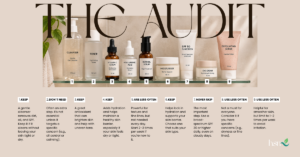
More products don’t automatically make your routine more effective. You may have three serums doing similar jobs, two different exfoliants, or products you keep using without really knowing why. Constantly swapping products can make things even harder, especially when irritation starts, and you have no idea which step is causing it.
Take a look at each product on your shelf and ask yourself one question: “If you can’t explain what this product is doing for your skin, why is it on your shelf?” If you don’t have a clear answer, it may be worth asking whether you need that product at all.
How should your skincare routine change for your skin type?
Your skincare routine should match your skin’s needs. Oily skin benefits from lighter products, while dry skin requires more hydration. Sensitive skin needs gentle products with fewer irritants. Keep the same basic routine but choose products that suit your skin type.
Oily skin still needs moisturiser
When your skin becomes oily, your first instinct might be to wash it more or to stop using moisturizer altogether. However, trying to “dry out” oily skin can lead to irritation and dryness without addressing the oiliness you are trying to manage. It’s important to keep moisturizer in your routine but choose a lightweight formula that feels comfortable on your skin, rather than a thick, heavy one.
Oily skin can also come with acne, and that’s where skincare products have their limits. If your acne is persistent, painful, cystic, or leaving scars, repeatedly replacing one “natural” product with another isn’t a substitute for proper care. A dermatologist or healthcare professional can assess what’s causing the problem and help you find appropriate treatment.
Sensitive skin needs fewer experiments, not more natural ingredients
If your skin is sensitive or reactive, a formula packed with botanical ingredients isn’t automatically the gentler choice. Fragrance, essential oils and certain plant extracts can still irritate sensitive skin. Instead of searching for products with the longest list of natural ingredients, start with a simple cleanser, moisturiser and SPF that your skin tolerates well.
From there, introduce one additional product at a time if you actually need it. This gives you a chance to see how your skin responds before adding something else.
Dry skin doesn’t necessarily need another facial oil
If your skin feels tight, rough or flaky, don’t assume another facial oil is what’s missing. First, look at the basics. Your cleanser could be leaving your skin feeling stripped, or your moisturiser may not be giving your dry skin enough hydration. Fixing one of those steps could be more useful than adding another product on top of it.
If you’re searching for natural skincare brands SA online or in-store, it can be tempting to reach for a facial oil as soon as your skin feels dry. Jojoba oil can be added as an optional final step after moisturiser if your skin responds well to it, but oil on its own isn’t a fix for dehydrated skin. Your cleanser and moisturiser still need to do the main work.
Can you make natural skincare products at home?
Yes, you can prepare simple DIY skincare mixtures at home, but that is different from creating a properly formulated cosmetic product. A commercial moisturiser or cleanser is developed with controlled ingredient concentrations, a suitable pH and a preservation system where needed. Homemade mixtures rarely have those checks, which makes their safety, consistency and shelf life harder to establish.
Your kitchen isn’t a cosmetic laboratory
Mixing ingredients that are safe to eat doesn’t automatically make them suitable for your face. A skincare formula needs the right ingredient concentrations and pH, as well as protection against contamination. Without those controls, a homemade mixture can irritate your skin or become unsafe to use, even when its ingredients are natural [freelanceformulations.com].
- Lemon juice: Lemon juice is highly acidic, with a pH of around 2. Applying it directly to your face can cause irritation because its acidity is not balanced for skincare use. Citrus ingredients can pose an additional concern when certain compounds react with sunlight, potentially causing a skin reaction.
- Baking soda: Baking soda is alkaline, with a pH around 9. Your skin has a naturally acidic surface, so applying an alkaline mixture can disrupt that environment and leave your skin feeling irritated or uncomfortable. It isn’t a gentle facial exfoliant simply because it is a common household ingredient.
- Undiluted essential oils: Essential oils are concentrated plant extracts, not ready-to-use facial treatments. Applying them directly can trigger irritation or allergic contact dermatitis, particularly when the oil is used at a high concentration. Fragrance ingredients, including some essential oils, are recognised cosmetic allergens.
- Homemade mixtures containing water: Adding water, aloe vera or fresh ingredients creates conditions in which bacteria and fungi can grow. Commercial cosmetics use suitable preservation systems and controlled manufacturing processes to limit this risk. Without a properly developed preservative system, a homemade mixture can become contaminated even when it looks and smells normal. Storing it in the fridge does not replace proper preservation or establish a safe shelf life.
There is a practical alternative if you want a simple, natural-leaning routine. Choose a properly formulated cleanser and moisturiser with ingredients that suit your skin, rather than mixing several kitchen ingredients and hoping they work well together. Keep sunscreen as a separate daily step, and use evidence-based skincare products or professional advice for concerns such as persistent acne or pigmentation. Homemade mixtures should never replace sun protection or appropriate treatment for a skin condition.
Conclusion: Your bathroom shelf should make sense to you
Before buying another serum, facial oil, or exfoliating product, take a few minutes to complete the Bathroom Shelf Audit. Start by choosing the three products you use most regularly. For each one, write down what it does, which skin concern or everyday need it addresses, and when you use it.
Then look at the rest of your shelf. Pick up each product and ask yourself whether it has a clear purpose in your routine. Do you already have something that does the same job? Does your skin respond well to it? Is it something you use consistently, or has it been sitting unopened since you bought it?
This gives you a practical way to decide what deserves a place in your routine before spending more money. A product should earn its place because its formulation suits your skin and serves a purpose, not simply because the packaging says natural or organic. A smaller routine that works for your skin is worth more than a shelf full of products you don’t really need.
FAQs about Organic Skincare South Africa
Which two serums cannot be used together?
There isn’t one pair of serums that you should never use together, because the formula, strength of the ingredients and your skin’s tolerance all matter. Layering strong exfoliating acids with other powerful actives, or using several exfoliating products together, can leave your skin irritated. If your skin is sensitive or you’re new to actives, try using them on different days instead of layering everything at once.
Which organic brand is best for skin care?
There isn’t one organic skincare brand that is best for everyone. Instead, look at whether an individual product is formulated for your skin type and the concern you want to address, while still fitting your budget. In South Africa, you can choose from both local and international natural and organic skincare options.
How do Koreans keep their skin so clear?
Not every Korean individual has clear skin, and there isn’t one K-beauty routine behind it. Korean skincare culture places a strong focus on consistent cleansing, hydration, and sun protection, but genetics, environment, skin conditions, and access to dermatological care also play a role. For your own skin, consistency matters more than copying a complicated 10-step routine.
