You spend hundreds of rand on healthy groceries and come home feeling like you’ve stocked up for the week. A few days later, you open the fridge and realise you have plenty of food, but none of it seems to go together. Now you’re standing there trying to work out what you can actually make for dinner.
This guide helps you plan a grocery shop that lasts the whole week. It includes what to buy, when to spend more, where budget options are effective, and how to turn those groceries into meals for breakfast, lunch, and dinner. By the end, you’ll have a full weekly shop for around R800.
Key Takeaways
- Check your pantry and freezer before shopping. You may already have rice, oats, cooking oil, frozen vegetables or other staples that can go towards the week’s meals, leaving more of your budget for ingredients you still need.
- Choose ingredients that work across several meals. Eggs, oats, rice and lentils can be used in different ways throughout the week, helping you make breakfasts, lunches and dinners without buying separate ingredients for every dish.
- Use frozen and tinned foods to make your groceries go further. Frozen vegetables, tinned beans and pilchards have a longer shelf life than some fresh alternatives, making portioning easier and helping reduce food waste.
- Compare unit prices before choosing a product. Check the price per kilogram or 100 g rather than automatically reaching for the cheapest-looking packet. A larger pack may offer better value, provided you will use it before it goes off.
- Adjust the R800 example to your household. The shopping list is designed around one adult. A couple or family will need to increase quantities, while someone who eats lunch at work or has regular meals elsewhere may need less.
What should be on a healthy grocery list?
A healthy grocery list South Africa should cover the basics for balanced meals without making your shop unnecessarily expensive. Include vegetables and fruit, whole grains or high-fibre staples, protein sources, and healthy fats. Choosing foods you already enjoy and can use across several meals can also make healthy eating easier to maintain.
Shop for meals, not individual “healthy” foods
You can buy spinach, avocado, yoghurt, berries and protein bars and still get home wondering what to make for supper. The problem may not be what you bought, but how you shopped. Before adding something to your trolley, ask yourself: “What meal will this become?”
It also helps to buy ingredients you can use in different meals. Eggs can be served on toast for breakfast, boiled for a snack or made into an omelette with leftover vegetables. Chicken can be used in a rice bowl one night and a wrap the next. Spinach can be added to eggs, wraps or a lentil dish.
How much food do you actually need for one week?
For one adult, a weekly grocery shop should cover the meals you realistically eat at home, rather than seven completely different breakfasts, lunches and dinners. The quantities depend on your appetite, how often you cook, whether you eat lunch at work and how frequently you share meals with family. The R800 trolley later in this guide is a starting point, not a fixed amount for everyone.
Start by working out how many times you’ll use each ingredient before deciding how much to buy. For example, 1 kg of oats can cover several breakfasts, while a dozen eggs can be used for breakfast, lunch or a quick omelette. A 1 kg bag of rice can provide several side portions, and 500 g of dried lentils can stretch across multiple lunches or dinners.
Some ingredients will be used across several meals, while others are intended for a specific dish. Chicken portions could cover a dinner and leftover wraps for lunch the next day. Frozen vegetables can be divided between rice bowls and other meals without needing to use the whole bag at once.
The thing is, your shopping list should change with your routine. Someone who buys lunch at work five days a week may need less bread, eggs, or other lunch ingredients than someone who eats every meal at home. A person who regularly has dinner with family may need fewer supper portions. Before shopping, check your fridge, freezer, and pantry, then adjust the quantities to cover the meals you still need.
What are the best affordable healthy foods to buy in South Africa?
A grocery list for healthy eating SA can include affordable staples such as oats, rice, potatoes, beans, lentils, eggs, chicken, seasonal vegetables and fruit. These foods provide a mix of protein, carbohydrates, fibre and essential nutrients without requiring expensive products. Choosing versatile ingredients also helps you stretch your budget across several meals.
The cheapest protein isn’t always chicken breast
Chicken breast may be a familiar choice, but it is not the only affordable way to add protein to your meals. Eggs, dried lentils, beans, tinned pilchards or sardines, and lean mince can all work, depending on your budget. The better comparison is how many meals each option can provide, rather than looking only at the shelf price.
Dried lentils are a good example. They may seem less convenient than a packaged high-protein product, but one bag can stretch across several lunches or dinners. If you shop online, brown lentils from Faithful to Nature are one option to keep in your pantry. You do not need to buy organic lentils to eat healthily. Lentils themselves are an affordable staple that can stretch across several meals.
Frozen vegetables can be the smarter buy
Fresh does not automatically mean healthier, and frozen vegetables can be a practical choice when you are trying to keep your grocery bill down. Plain frozen spinach, peas and mixed vegetables are easy to portion, so you can take out what you need and keep the rest frozen for another meal. This can be especially helpful when you shop for one.
Think about what actually gets eaten. Fresh vegetables that cost R30-R40 are not a bargain if half of it ends up in the bin. Frozen vegetables can help you avoid that waste, but check the label when you shop. Choose plain vegetables rather than versions with creamy sauces or other added ingredients.
Which fruit gives you the most use before it goes off?
When you’re buying fruit for the week, it helps to think about how quickly it will actually get eaten. Bananas are great for breakfast or a quick snack, but they can ripen quickly. Apples tend to last longer and are easy to grab when you’re heading out, while seasonal fruit may give you better value than buying berries or imported fruit every week.
Try mixing fruit you’ll eat early in the week with options that will keep for a few more days. That way, you’re less likely to end up throwing half your fruit away by Friday.
Which healthy foods are actually worth spending more on?
Some healthy foods can be worth spending a little more on, particularly extra-virgin olive oil, eggs, and good-quality meat. These are foods where quality may matter more to you, especially if you use them regularly. For everyday staples such as oats, rice, beans and frozen vegetables, there is usually no need to choose the most expensive option.
Don’t pay a “health premium” for a prettier packet
Food does not become healthier just because the packet looks more expensive. Ordinary rolled oats are still oats, and store-brand brown rice can do the same job as a premium wellness-branded version. Dried beans also do not need a fancy label to be a useful, nutritious staple.
Instead of judging a product by the front of the packet, turn it around and compare the ingredients, nutritional information and price per unit. Words such as “natural,” “fit,” “detox” and “superfood” can make a product sound healthier without giving you a good reason to pay more.
What pantry staples should South Africans always keep at home?
Keeping a few pantry staples at home makes it easier to put together a meal without another trip to the shops. Think oats, rice, pasta, potatoes, beans, lentils, tinned fish, cooking oil and a few basic spices. Choose foods you regularly use, so your pantry stays practical rather than filling up with ingredients you rarely touch.
Keep three “I have nothing to cook” meals in the cupboard
We’ve all had those evenings when the fridge looks empty and getting takeaway feels like the easiest option. Keeping a few shelf-stable ingredients at home gives you something to fall back on.
- Lentils + tinned tomatoes + rice + spices → a simple lentil curry.
- Tinned pilchards or tuna + rice + frozen vegetables → a quick rice bowl.
- Oats + peanut butter + banana → breakfast or an easy meal when cooking isn’t happening.
The trick is to plan for backup meals rather than buy pantry staples without knowing how you’ll use them.
Peanut butter can be healthy, but check what’s actually in the jar
Peanut butter is one of those handy staples that can work in plenty of meals, but it’s worth checking what’s actually in the jar. Look for peanuts near the top of the ingredient list and avoid products loaded with added sugar or unnecessary oils.
Just keep portions in mind because peanut butter is energy-dense. A measured spoonful can be added to oats, spread on toast, or paired with a banana or apple to enjoy it without going overboard.
Organic doesn’t automatically make a staple healthier
Choosing organic products can be a personal preference. However, it doesn’t mean you need to buy organic to eat healthily. Ordinary rolled oats are still a nutritious, affordable staple and can easily form part of a healthy breakfast. The most important thing is to choose an option that fits your budget and that you will actually use.
If buying organic matters to you, organic rolled oats are another alternative. They are not essential for healthy eating. Regular rolled oats are also nutritious, affordable and easy to use, making them a practical choice when you’re shopping on a budget.
What does a healthy weekly grocery shop look like in South Africa?
A healthy weekly grocery shop in South Africa does not need to be complicated or expensive. A practical shop can include vegetables and fruit, eggs, chicken or other affordable proteins, oats, rice, potatoes, beans or lentils, plus a few pantry staples. The goal is to have enough food for the week without buying more than you are likely to eat.
Start with foods that can do more than one job
The easiest way to build a weekly shop is to start with foods you already know you’ll use. Rather than buying individual “healthy” foods, think about what each ingredient will actually become during the week.
For one adult, the trolley could look something like this:
| Grocery item | Listed price |
| Eggs, 12 | R50 |
| Chicken portions, 1 kg | R80 |
| Lentils or beans, 500 g | R30 |
| Pilchards or tuna, 2 tins | R48 |
| Oats, 1 kg | R36 |
| Rice, 1 kg | R30 |
| Potatoes or sweet potatoes, 1 kg | R30 |
| Bread or wraps | R40 |
| Spinach or cabbage | R30 |
| Tomatoes, 4-6 | R29 |
| Onions, 1 kg | R30 |
| Frozen mixed vegetables, 1 kg | R60 |
| Bananas, 6-7 | R30 |
| Apples or seasonal fruit, 4-6 | R35 |
| Plain yoghurt or milk | R35 |
| Peanut butter, 1 jar | R50 |
| Tinned tomatoes, 2 tins | R50 |
| Cooking oil, 500 ml | R38 |
| Basic spices | R60 |
| Total using the listed prices | R771 |
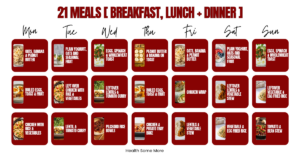
One Grocery Trolley → 7 Real Dinner Meals + Breakfast and Lunch
How can you keep a healthy grocery shop within budget?
Keeping a healthy grocery shop within budget starts with planning before you get to the supermarket. Build your shop around affordable staples, compare prices by weight, use frozen or tinned foods when they reduce waste, and check what you already have at home. You can also use weekly specials for foods you already planned to buy.
Compare the price per kilogram, not just the number on the shelf
The price on the shelf does not always tell you which option is cheaper. For example, a 500 g bag for R30 works out to R60 for a kg, while a 1 kg bag costs R50. The larger bag is cheaper per kilogram, but only if you will actually use it.
Buying larger packs can make sense for foods such as oats, rice and dried lentils because they have a longer shelf life. Fresh produce is different. There is no saving in buying more if you end up throwing half of it away before you get a chance to use it.
Your freezer can save more money than chasing specials
A special is only a saving if you actually use what you buy. If chicken is discounted, split it into meal-sized portions and freeze what you will not use straight away. You can also freeze bread before it goes stale and ripe bananas for oats or smoothies.
Your freezer can also help with leftovers. Store cooked meals in individual portions so you have an easy lunch or dinner ready when you need it. This means less food gets wasted and fewer last-minute grocery runs are needed.
What should you buy at Woolworths if you’re trying to eat healthier?
Some Woolworths healthy foods are worth looking for because they offer something more specific than your everyday basics. Their Ayrshire High Protein Low Fat Drinking Yoghurt packs 15 g of protein per bottle, while the Lactose Free Low Fat Ayrshire Plain Yoghurt offers a dairy option for those who struggle with lactose.
Don’t confuse the “health” aisle with healthier eating
You do not need to head straight for the “health” aisle to build a healthy trolley. Everyday basics such as plain oats, eggs, vegetables, fruit, beans or lentils, plain yoghurt, chicken or fish and wholegrain staples can all do the job. These are foods you will use throughout the week.
A product does not become healthier because it comes in premium packaging or is marketed as a “wellness” food. The same approach can work whether you shop at Woolworths, Checkers, Pick n Pay, Shoprite or your local supermarket. Focus on what is in the food, how you will use it and whether it fits your budget.
Do you need to eat “clean” to have a healthy grocery trolley?
No, you do not need expensive specialty products to eat well. If you are wondering what to buy for clean eating, start with simple foods such as vegetables, fruit, eggs, chicken, fish, oats, rice, beans, lentils and plain yoghurt. The focus should be on nutritious, everyday foods that fit your meals and budget.
A realistic trolley still has room for convenience foods
Eating well does not mean everything in your trolley needs to be fresh, homemade or cooked from scratch. Convenience foods can make healthy eating much easier when you work long hours, have children or do not have much time to cook. The key is choosing options that still give you nutrition without making meals harder than they need to be.
Frozen vegetables, tinned beans, tinned fish, pre-cut vegetables when they fit your budget, plain yoghurt and wholegrain bread can all save time. Having a few of these options at home means you can put together something quick without having to start every meal from scratch.
Don’t buy an aspirational version of yourself
Be honest about what you are actually going to eat once you get home. Buying kale, ingredients for complicated meal prep, and five different fruits might look like a healthy shop, but it won’t save you money if you already know you will not have time to use them. Your grocery list should fit your real routine, not an ideal version of it.
If your mornings are rushed, buy a breakfast that takes a couple of minutes to put together. If you do not enjoy making lunch, cook enough for dinner so you have leftovers for the next day. And if fresh vegetables regularly end up in the bin, keep some frozen ones on hand instead. The best grocery shop is one that matches how you actually live and eat.
Conclusion: A Better Grocery Shop Starts Before You Reach the Till
A healthy grocery shop does not have to mean a trolley packed with expensive “healthy” products. Before you reach the till, you should already have a good idea of what most of your groceries will become. That simple check can help you avoid buying food that looks good in the shop but ends up going to waste at home.
Use the One Grocery Trolley → 12 Real Meals as a starting point for your next shop. Then adjust it to your budget, household size, and what you already have in the fridge, freezer, and pantry. You do not need to copy the trolley exactly (the goal is to make every rand and every ingredient count).
If you want to lose weight, we have two pieces you might be interested in:
- Weight Loss 7 Day Diet Plan – Guaranteed Results for South Africans
- Protein Shakes for Weight Loss: A Comprehensive South African Guide
FAQs about a Healthy Grocery List South Africa
What is the healthiest food in South Africa?
There is no single “healthiest” food in South Africa. A healthy diet is built around a mix of nutritious foods, such as eggs, beans and lentils, pilchards, oats, vegetables and fruit, rather than relying on one so-called superfood.
What should be on a healthy grocery list?
Your grocery list should include a mix of protein, high-fibre carbohydrates, fruit and vegetables, and healthy fats to be able to make healthy meals. Add a few convenient foods, such as frozen vegetables, tinned beans or fish and plain yoghurt, to make it easier to turn those ingredients into quick, balanced meals.
What is the slowest shopping day of the week?
There is no single slowest shopping day across South Africa, as supermarket traffic can vary by store, location, time of day and payday cycles. If you want to avoid the busiest periods, midweek shopping is often a better bet than Friday or the weekend, particularly outside the after-work rush.
Are supermarket own-brand foods as healthy as branded products?
Yes. Supermarket own-brand products can be just as nutritious as more expensive branded alternatives. Compare the ingredients, nutritional information and portion sizes rather than relying on the brand name. This is particularly useful for everyday foods such as oats, rice, tinned beans, frozen vegetables and plain yoghurt.
Is it better to do one big grocery shop or several smaller shops?
One larger weekly shop can help you plan meals, control spending and avoid unnecessary trips to the supermarket. However, you may need smaller top-up shops for fresh produce, milk or other ingredients that run out during the week. The best approach is to plan your main meals first and only buy additional items when needed.